How we learn as children
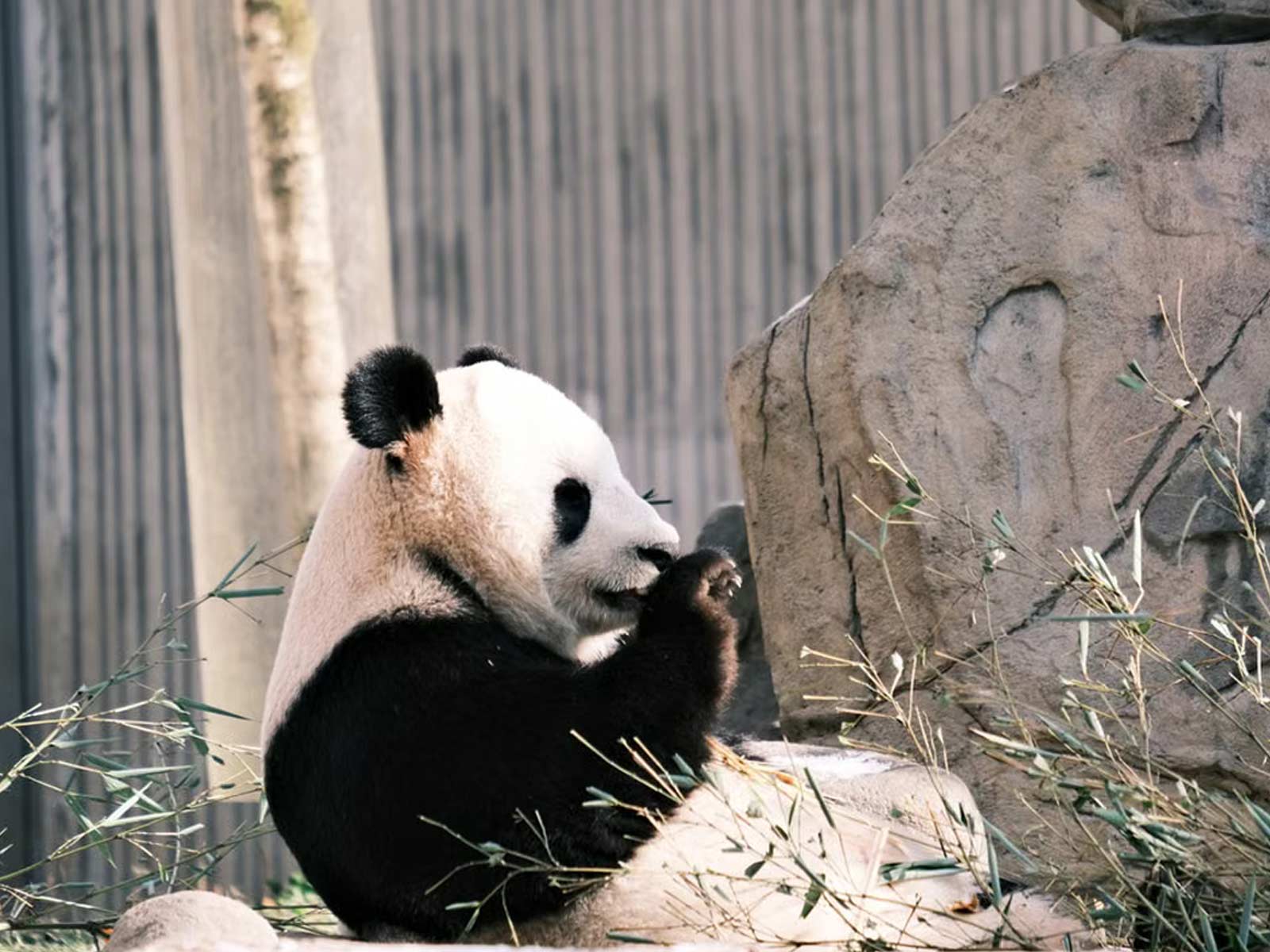
Synopsis: A panda raised by humans grimaces every time he snaps bamboo. It isn't because it's hard for him. It's because he watched his keepers struggle with it. We learn our relationship defences the same way: some in reaction to what we faced as children, others copied from the adults around us. Strategies that once kept us safe can run automatically in adult relationships, at a cost. The good news is that what was learned can be noticed and changed. Therapy helps us catch old patterns and respond to what's happening now. The first step is curiosity: whose face is this?
Every time this panda breaks a stalk of bamboo, he grimaces. He bares his teeth, strains and turns his face away, as if it was hard work. But it isn’t. Pandas snap bamboo with ease. This panda was rejected by his mother and raised by his keepers, and for humans, breaking bamboo is hard work. They grimaced. He watched. He learned that grimacing is simply part of how you break bamboo. Sometimes he forgets, snaps the stalk, then pulls the face afterwards, just to get it right.
The grimace has nothing to do with the bamboo. It has everything to do with who showed him how.
We learn in much the same way. The ways we protect ourselves in close relationships were mostly learned in childhood, long before we could choose our actions. These learned protections were a child’s best solution to what they faced, and they did their job. There are two main ways this learning happens.
Reacting to what came at us
Some defences formed in response to what we lived through. If a parent was intrusive, critical or overwhelming, a child may learn to retreat behind a wall: go quiet, shut down, keep their inner world to themselves. The wall kept them safe then. As adults, the same wall can go up with a partner who simply wants to be close.
Modelling what we saw
Other defences were copied. We watched the adults around us and absorbed how relationships are done. A child who saw their father withdraw behind a wall whenever there was tension may never have been intruded on themselves. They learned that this is what you do when things get hard. Like the panda, they are repeating what they were shown, whether or not it fits what is in front of them.
Either way, the result can look the same: a strategy that once made sense, now running automatically, often at a cost to the relationships we care about most.
The good news is that what was learned can be noticed, understood and changed. Part of the work in therapy is recognising when an old, childhood strategy has taken over, and making room for the grown-up part of us that can respond to what is actually happening now, rather than to what happened then.
The first step is curiosity. When you catch yourself grimacing at the bamboo, ask: whose face is this? Is it mine, or one I learned?