We see what we expect
Synopsis: A Coca-Cola can looks red, yet it contains no red pixels at all. Our brains fill the gaps, predicting what's there based on past experience. It's why people saw "the dress" so differently, and why we jump at sticks that look like snakes. We bring the same predicting brain to our relationships, seeing what we expect in our partners and missing what doesn't fit. This is biology, not a character flaw. The antidote is to slow down, question our certainty, and offer generosity: asking before assuming and staying open to other possibilities.
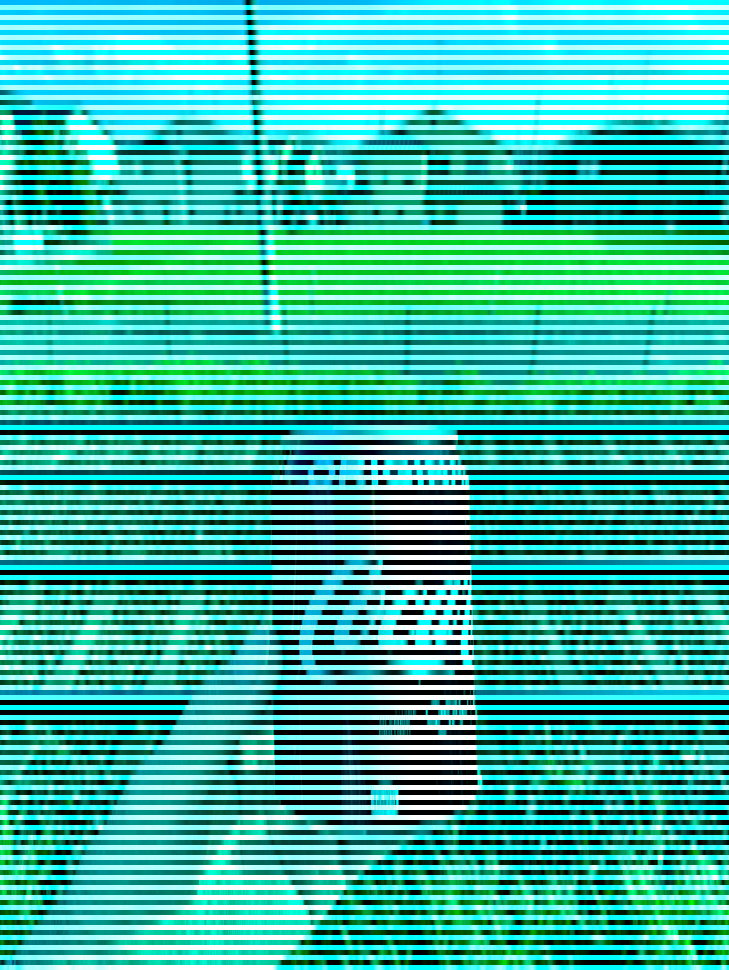
Look at this can of Coca-Cola. It looks red. Now zoom in. There is no red. The image consists of only blue-green, black and white stripes. The image creator psychology professor Akiyoshi Kitaoka confirms there isn’t a single reddish pixel in it.
The red you ‘see’ is filled in by your brain.
Your brain lives in the dark. It never meets the world directly. It makes predictions based on past experiences and samples the world receiving signals from your senses, and from these it makes its best prediction about what is out in the world. Your brain knows that Coke branding is red. It fills in the gaps and smooths things over to match what makes sense.
This is how brains work, all the time. Neuroscientist Anil Seth calls our conscious experience a “controlled hallucination”. As he puts it: “We’re all hallucinating all the time; when we agree about our hallucinations, we call it ‘reality’.”
The dress
You may remember the photo of a dress that divided the Internet in 2015. Some people were certain it was white and gold. Others were just as certain it was blue and black. (The real dress was blue and black.)
In his book The Experience Machine,philosopher Andy Clark explains why. The lighting in the photo is unclear, so each brain has to guess. People who assume the dress is in natural daylight see white and gold. People who assume artificial light see blue and black. One study even found early risers are more likely to assume daylight, and night owls artificial light. Same photo, different predictions, different realities, and each person sure they were simply seeing what was there.
A survival advantage
This way of seeing helps us survive. On a bush track, a curved shape on the ground looks like a snake. You jump before you’ve had time to think. If it turns out to be a stick, you’ve had a fright rather than a bite and a harrowing trip to the emergency department. A brain that predicts quickly and errs on the side of danger keeps us alive.
What this means in relationships
We bring the same brain to the people we love. We look at each other through a lens of prediction.
If I believe you are careless or half-hearted, I will notice the evidence that fits and ignore what doesn’t. I see what I expect to see, even when it’s painful. If I expect you to be defensive, I will read your reaction as defensive, even when it’s something else: tiredness, hurt, or simply a pause while you think.
Our partner does the same with us. Like the dress, two people can live through the same moment and walk away with two different, deeply felt realities, each certain they saw it clearly.
This isn’t a character flaw. It’s biology. We can’t switch it off. But we can learn to expect it.
Slowing down
The most useful thing we can do is slow down and check our certainty. When you feel sure you know what your partner meant, that is the moment to pause and ask: is this what’s happening, or what I expected to happen? What else might be true?
We each have a looser grip on a shared reality than it feels. Knowing this, generosity becomes more than a kindness. It is the only real antidote to our own neurobiology: giving the other person the benefit of the doubt, asking before assuming, and staying open to the possibility that what we saw was, at least in part, what we expected to see.
References & further information
Image: Akiyoshi Kitaoka, “Illusory reddish coke can”, Ritsumeikan University. Introduction to Optical Illusion
Andy Clark, The Experience Machine: How Our Minds Predict and Shape Reality (Allen Lane, 2023).
Anil Seth, “Your brain hallucinates your conscious reality”, TED 2017. Watch the talk
Test The Image
Hover and magnify (desktop) or pinch and zoom (mobile) into the image to see its actually a black and white Coke can.